Your browser is not up to date. We encourage you to change or update your browser to ensure the best possible experience on our site.
Article

China: which way will the swing factors swing?

Platinum China analyst, Ying Luo, discusses the swing factors in the Chinese economy: property, the consumer, technology and tariffs.1 

I’ve just come back from Hong Kong, Shenzhen and Dongguan, a manufacturing base and global logistics hub on the Pearl River Delta.  I visited 25+ companies, well-known names like BYD and Tencent as well as obscure but exciting firms building robots.

You take these trips to learn more about companies you hold and to assess potential buys. Even in a world of Zoom calls and instant data transfer it’s good to see an economy close-up – to hear what cab drivers are saying, see what’s shifting in the shops and pick up useful titbits on the sidelines of industry conferences. 

I also wanted to focus on the swing factors in the Chinese economy – consumption, property and the tariff war - and see which way they’re moving. 

The one-party state of the consumer

There are 1.4 billion Chinese consumers – a number that moves the Chinese and global economy. 

When we assess the Chinese consumer, it pays to look at numbers and psychology. Statistically, consumers remain tight-fisted. Consumer confidence is below pre-Covid levels, the savings rate is high and while total sales numbers are up, average spend is down. Conversely, some of the macro numbers are solidly positive. GDP was running at 5% annualised last quarter. 

However, Chinese shoppers will spend money if they find things that make them feel better. As a May 2025 McKinsey report put it, “Consumers are prioritizing personal fulfillment.”

Consumers are moving beyond price and brand toward products that tell a story. Whether through sponsorship, social media marketing or events, Chinese businesses are building emotional connections with customers, a strategy that’s easier for niche players.

To take one example, Pop Mart, a maker of collectible toys, used TikTok, celebrity endorsement and carefully calibrated scarcity to create a phenomenon – the Labubu doll which last year had annual sales worth US$1.2 billion. Thanks to Labubu, Pop Mart is no longer niche. It’s worth US$55 billion – more than Hasbro or Mattel.

The Platinum Asia Fund is playing into this trend by owning China’s best internet retail platforms, Alibaba and Tencent, where niche brands can reach their audience.

Building back better, slowly

The companies and individuals I spoke to offered varied opinions about the property market – the segment of the Chinese economy casting a pall over all others. 

Most agree the property market has bottomed and is grinding along, with some potential upside. The consumer companies blame property for weak consumer confidence. Property players blame weak consumer confidence for the struggling property market. 

Some investors and commentators call for big stimulus cheques to inject animal spirits into the property market. However, Chinese regulators seem happy for the market to ‘clear’ itself, with some regulatory changes at the margin designed to help. As ever in China, the picture is multicoloured. Bigger urban centres are improving while lower-tier cities will take longer to recover with flow-on effects for construction and other businesses in their regions. 

Growth in the machines

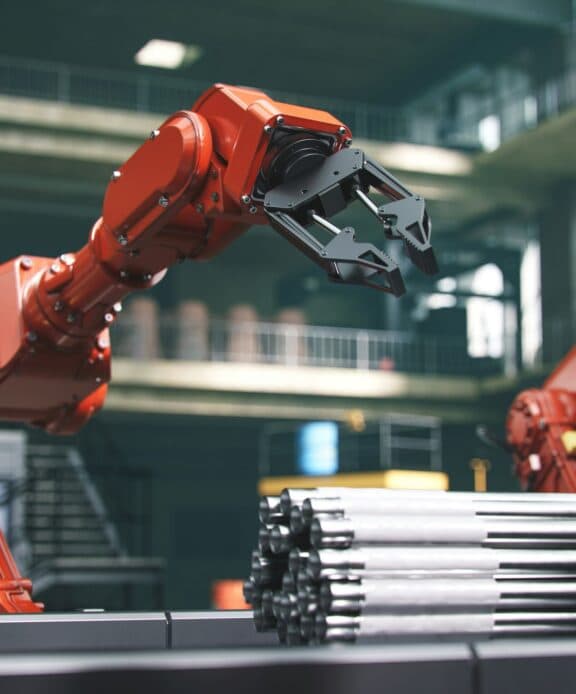
If the consumer and property are still struggling for traction, robotics is where China wants to leap ahead. Investment in robotics attracts government subsidies and research support. If you’re in robotics the normal layers of bureaucracy peel away. 

In Hong Kong and Shenzhen, I saw robots in action in ways you just won’t see in Melbourne and Sydney. In some hotels, robots deliver room service. In major cities there are drones delivering consumer goods to pick-up centres. But while these look impressive, the weight of money and research is going into co-operative robots (Cobots) designed for industrial use as well as into humanoid robots.

While AI is the technology on everyone’s lips, how it integrates into robotics is one area we’re watching carefully in China – and other markets.

The tariff war and the 90-day treaties

While President Trump aimed much of his trade war rhetoric at China, two 90-day pauses have delayed the impact of the new tariffs. Unlike many countries, China has real bargaining power in this round of trade negotiations with the US.

  • Command of the rare earths market gives it leverage in any trade deal.

  • China exports less to the US than other countries. 

  • Many Chinese firms exposed to the US can switch to other markets. 

  • Much of the tariff burden has fallen on US importers and consumers rather than Chinese suppliers. This may change over time and tariffs can hurt smaller companies with limited bargaining power. But the large companies I spoke to have yet to feel the pain from US tariffs.


In the Platinum Asia Fund, our exposure to Chinese shares is largely in domestic facing businessses that have limited US export exposure. 

China, the investors’ view

At its current stage of development, China’s days of 10% annual GDP growth are over. It’s a country in transition with ever more emphasis on the consumer and high tech rather than heavy manufacturing. The companies we hold in the Platinum Asia Fund – like consumer businesses, Tencent, Alibaba and JD.com, social media firm Kuaishou Technology and online video-sharing business Billibilli - are in those future-facing fields. They are leaders in their segments, technology-oriented, with big R&D budgets. 

While the rhetoric around China has been consistently negative, Chinese shares have delivered for investors recently. 

  • The MSCI China Index is up nearly 7% a year over the past three years.

  • The MSCI China Index is up over 40% over the past year.

As mentioned earlier, China is so big and diverse and its population so adaptable and hardworking there are always interesting investment opportunities. That’s why we have a sizeable exposure to China in the Platinum Asia Fund.


1. Ying is a China equity analyst at Platinum. Born in China, educated in Hong Kong and Australia, Ying is a native Mandarin speaker and regularly visits China. 
2. See www.mckinsey.com/cn/our-insights/our-insights/chinese-consumption-amid-the-new-reality  
3. Marketers talk about the “means-end chain”. That’s how consumers move past the physical and practical aspects of a product to the social and emotional benefits it confers - like buying a car that says you’ve ‘arrived’ in more ways than one. 
4. See www.china-briefing.com/news/chinas-collectable-toys-market-pop-marts-labubu-phenomenon  
5. Source: FactSet, all numbers in local currency to end August 2025 
Disclaimer The above information is commentary only (i.e. our general thoughts). It is not intended to be, nor should it be construed as, investment advice. To the extent permitted by law, no liability is accepted for any loss or damage as a result of any reliance on this information. Before making any investment decision you need to consider (with your financial adviser) your particular investment needs, objectives and circumstances.

From the journal

View all
View all