After years of lagging performance, Korea’s sharemarket look ready to capture the moment.
Global investors have long talked about the “Korea discount” – geopolitical, economic and governance risks that kept South Korean stocks priced below their intrinsic value. The country boasts world-class companies – think Samsung (electronics), SK hynix (semiconductors) and Hyundai (cars and heavy industry). Yet its stockmarket, the KOSPI, returned less than 4% p.a. over the past decade.1
That makes Korea interesting. At Platinum, we know opportunity often arises when other investors lazily project the past forward. Could Korea be on the cusp of change that reverses the discount and makes it a buying opportunity?
Three of our most experienced investors were looking to find out: Cameron Robertson – portfolio manager of the Platinum Asia Fund, Andrew Baud – a senior analyst in the Asia team and Andrew Clifford – a Platinum co-founder, former CIO and member of Platinum’s Investment Oversight Group.
They crisscrossed Seoul and its environs for seven days and 25 meetings.2 They visited companies we already hold to refresh our view of their investment cases. And met companies poised to benefit from emerging investment themes. Here’s what they saw.
A successful Korea
Between 1970 and 2022 South Korea’s economy grew at over 6% a year.3 With just 50 million people it’s Asia’s fourth largest economy and the 14th largest in the world.4 It’s also wealthy: 23rd in the world by income.
“I first started talking to Korean executives, face-to-face, back in the early 90s,” says Platinum co-founder, Andrew Clifford. “The most striking change over that time is the range of industries where Korean companies have captured share.”
Whilst South Korea’s success is reflected in the lifestyle of its people and its growing diplomatic and cultural influence, that success hasn’t always flowed to investors.
Elephants in the room
One reason is the dominance of the chaebols, giant, family-dominated conglomerates like Samsung, LG, Hyundai, POSCO and Hanwha. Chaebols represent under one percent of all Korean companies but their combined income is worth half the country’s GDP. Like the kereitsu in Japan, chaebols were instrumental to Korea’s economic miracle. Today however, they distort Korea’s economy.5
-
Chaebols resist reforms that push up share prices. A low valuation appeals to them because it lowers the tax take when they pass holdings to the next generation. That works against smaller investors.
-
Chaebols typically pay small dividends, keeping capital within the group structure rather than streaming revenue to shareholders.
-
Their size, financial strength and sway with government work against Korea’s small business sector.
-
Their opaque corporate structures make it hard for investors to analyse them - and to realise their inherent value.
-
They attract the best and brightest talent with the promise of a well-paid job for life. Korea might do better if its young talent was setting up new businesses.
A big neighbour leaning on the fence
Korean markets also suffered from external factors. China is Korea’s biggest trading partner. It’s also its major competitor. In the 1990s Korea grew by gnawing away at Japan’s industrial power base. Now China is the predator, chasing Korea in areas it used to dominate.
Hyundai Heavy Industries and Daewoo Shipbuilding & Marine are major shipbuilders. Twenty years ago, China was winning only 10% of global shipbuilding orders. Now Chinese scale, lower labour costs, government subsidies and new yards mean over 70% of orders went to China in 2024.6 Chinese competition also hurts Korea in cars, chipmaking and batteries.
As we moved into 2025, Korean businesses struggling to compete with their giant neighbour also faced the threat of a more protectionist America. To add to their struggles, sentiment towards Korea was muddied after a brief episode of martial law.7
The good news for Koreans – and investors - is a range of evolving forces that could boost the performance of Korean companies.
The rules of the game
The first of these forces is corporate governance. In early 2024, the Korean Financial Services Commission (FSC) launched its “Value-Up” Program – a series of reforms that echo an earlier reform push in Japan.8
Value-Up encourages companies to target better shareholder returns, to explicitly publish and communicate their plans and to benchmark performance against other Korean companies and global standards.
The government is backing these moves with suggestions of reward – like tax breaks - for good corporate behaviour such as increasing dividends and ‘allowing’ higher valuations.
As we write, Korean legislators have just amended their Commercial Act to expand board members’ fiduciary duty to protect the interests of minority shareholders.
“Value Up and changes to the Commercial Act are the latest parts in a long-running and sometimes stumbling effort by regulators and government to clean up governance and reduce the Korea discount,” says Cameron Robertson, Portfolio Manager of the Platinum Asia Fund.
These reforms include better disclosure and more efforts to reduce the issues arising out of conflicts of interest between big controlling shareholders and other stakeholders. They should give investors more clarity – and confidence.
Governance reform is electorally popular. Growing wealth means Koreans are enthusiastic investors – there are 14 million retail investors.
The recently elected President Lee Jae-myung is pushing ahead with these reforms and has made a stronger stockmarket – “Kospi 5000” – a policy plank of his administration.9 The Kospi jumped over 2% on the day of his victory. Tellingly, foreign investors flocked back to the market.
“We’re finding pockets of competitive strength in Korea that are supported by better governance, changing geopolitics and fiscal policies which make us more optimistic that good money can be made over the next few years,” says Cameron Robertson.

Today's Korean economy combines its traditional strengths in heavy industry with leadership in high-tech fields like biotech and semis.
A healthy complexity
One of the striking features of Korea’s economy is its complexity. Harvard’s Growth Lab measures the diversity and complexity of a country’s economy as a proxy for growth potential. South Korea ranks 5th in its Economic Complexity Index (ECI).10
Korea is strong in ‘heavy industry’ – in defence, power, autos and nuclear. Yet it is also an emerging power in semiconductors, health sciences and culture.
Getting heavy
In Western economies, demand for power has fallen for the past 10-15 years, a trend partly fuelled, (excuse the pun), by climate concerns. Countries focused on energy efficiency rather than energy generation and woke up with hollowed out energy generation just as data centres and AI drive huge increases in energy demand.
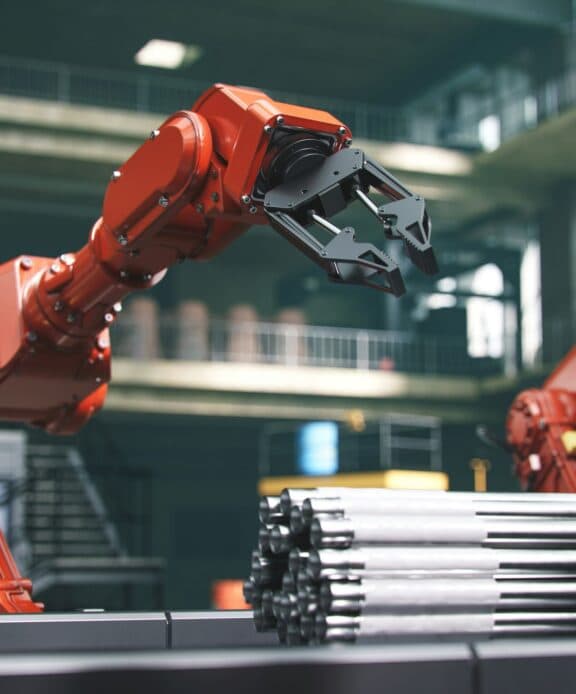
Korea can fill these energy gaps. It’s a leader in industrial-scale power equipment such as the transformers and switches deployed in factories, foundries and data centres.
One Korean firm, Doosan Enerbility says energy businesses - gas turbines, renewable energy, hydrogen energy and Small Modular Reactors (SMRs) – are its growth engine. It’s investing in extra capacity so it can produce up to 20 gas turbine and 20 SMR modules, largely to supply American technology companies building out data centre capacity.
Korea is also a major defence manufacturer. It’s geopolitically aligned with the US and Europe and has the defence production infrastructure to meet the West’s rapidly growing defence budgets. Hyundai Rotem recently inked a deal to sell US$6.5 billion worth of K2 tanks to Poland. Closer to home, Hanwha Defence Australia is building the Redback Infantry Fighting Vehicle. It’s a subsidiary of Hanwha – the 7th largest business in Korea.
Chipmakers and bio winners
Korea’s intensely competitive education system and elite universities like KAIST, Seoul National University and POSTECH give Korea a deep pool of engineering talent.11 That talent is deployed in heavy manufacturing – and in high-growth, future-facing industries.
Korea dominates semiconductor production, especially in the High Bandwidth Memory chips which enable ever-more AI use cases.
“We visited Samsung and SK hynix, two large holdings in the Platinum Asia Fund,” says Cameron Robertson. “We watch the supply dynamics in the semi space because in the past that’s what’s given us the clearest guide to sector performance. We also want to check in on new chip technologies.” 12
Platinum also invests down the semi supply chain. We hold EO Technics, which specialises in laser patterning and dicing for the sector. When we spoke to them, they said AI-driven demand was forcing semiconductor companies into EO Tech’s arms as they sought out new, more precise and contaminant-free manufacturing methods.
Within the rapidly growing Health Sciences space, Korea has companies like Samsung Biologics – a biotech powerhouse that’s the most efficient biologics producer in the world and is Korea’s 3rd largest business. Platinum’s team visited one firm that developed the world’s first ever biosimilar drug and another developing chemical solutions that improve drug efficacy and safety.
Full stream ahead
Korea is now a leading cultural player, producing films like the 2019 Best Picture winner Parasite and shows like Squid Game whose first season was watched by more than 265 million people.13 According to The Economist, K-pop groups had four of the ten most successful albums of 2024. In a very Korean twist, this happened while their biggest group – BTS – were off market doing National Service.
Korea: the new industrial revolutionary?
Korea is no longer an emerging market that can grow at 6% and lift all boats. It now moves to the slower, low-single-digit rhythm of a large, developed economy.
Yet the complexity of the Korean economy, its mix of heavy industry, new-technology and cultural exports may make it uniquely qualified for the challenges of our times.
Today’s great global theme is US/Chinese competition. Korea has become a trusted defence supplier to the West. Given global instability, that demand is only getting stronger. Korea also benefits from Western trade policies that exclude or weaken their Chinese competition. Many countries and firms are happier building supply chains with South Korean partners.
The other great theme of our age is AI. Korean businesses like Samsung and SK hynix are beneficiaries of that boom and the broader Korean technology ecosystem is adapting to its continuing revolution.
Our position in Korea
The Platinum investment methodology is to build portfolios from the bottom up, company by company.
We don’t allocate capital by country, but we do assess the economic, political and market dynamics of the countries our holdings come from because that drives key aspects of their performance. Today we’re happy to be overweight in Korean stocks, stocks poised to benefit from – and lead - revolutionary changes in growing industries.
-
South Korean stocks like sk Hynix, Hyundai Marine, Samsung and Coway were top performers for the Platinum Asia Fund in the June quarter. For more on the Platinum Asia Fund, see our Fund page
- Want to invest with Platinum?
1. In local currency, to 30/06/2025. Source: Factset
2. Seoul Special City, to use its official name, has a population of over 10 million. The broader Seoul megacity accommodates 25 million people – more than half the country’s total population. Seoul’s population density is twice that of New York. Source: World Population Review.
3. Source: Can South Korea’s new president get his country back on track? The Economist, 19 June 2025
4. Source: Statista, South Korea Overview
5. Interlocking networks of companies – like Mitsubishi and Sumitomo - that dominated Japan’s post-war economy.
6. South Korea’s Global Shipbuilding Market Share Hits 8-year low, Hellenic Shipping News, 9 January 2025
7. Assessment of Financial and Economic Impacts Following the Declaration of Martial Law and Approach to Response, Bank of Korea, December 2024
8. For our early take on Japan’s corporate governance reforms see www.platinum.com.au/the-journal/japan%E2%80%99s-reform-new-dawn-or-same-old-story
9. KOSPI surges as President Lee takes office with 5,000 target in sight, The Chosun Daily, 5 June 2025
10.See https://atlas.hks.harvard.edu/countries. By contrast, Australia ranks 105th on the ECI.
11.All highly regarded in engineering and technology
12.In 2025 SK hynix is up over 60% and Samsung up 12% (though Samsung has underperformed significantly over the past few years.) In local currency, to 26/06/2025. Source: Factset
13.Source: Byte Radar, January 2025